
 Kapha Dosha is the soft, yet powerful, energetic force residing in the body, comprised of both the Earth and Water elements. Kapha is typically considered the stable, sturdy, gross (as in solid), and unctuous property in the body. As a biological force, its main functions include support, lubrication, nourishment, strength, stamina, and physical growth. When Kapha is in balance, it brings a sense of groundedness, stability, compassion, and contentment. If Kapha is increased in the body, however, these positive traits may turn into laziness, lethargy, poor metabolism, low motivation, depression, attachment, and greed.
If you are experiencing a Kapha imbalance, this may manifest in a number of ways. Here are some common disorders that typically show a heightened state of Kapha in the system.
Common Signs of Kapha Imbalance
- Depression
- Attachment
- Lethargy, laziness
- Slow, dull, sluggish mind
- Cold, cough, runny nose
- Pulmonary congestion
- Sinus congestion
- Lymphatic congestion
- Low digestive fire
- Sleepiness after food
- Overweight, obesity
- Swelling, edema
- Excessive sleep
- High cholesterol
- High blood pressure
- Diabetes
- Lipomas, tumors
The first line of treatment for any imbalance is to REMOVE THE CAUSE. If you have a Kapha imbalance, these tips will help to alleviate the symptoms, but without removing the initial cause, the imbalance will always remain. Here is a non-exhaustive list of some common instigators in the provocation of Kapha.
Common Causes of Kapha Imbalance
- Sweet, salty, sour foods
- Heavy foods (dairy, meat, gluten, wheat, refined grains)
- Oily, fatty foods
- Dairy
- Sugar (especially refined)
- Cold food and drinks
- Drinking too much water
- Eating food past 7 pm
- Snacking, grazing, and eating meals too close together
- Emotional eating
- Sedentary lifestyle
- Too much sleep
- Napping
- Humidity and dampness
- Winter and Spring seasons
- Incompatible food combinations (click here for complete chart)
Once you have discovered the cause, you can then work on removing it. Unfortunately, the longer the provocation, the stronger the imbalance will be. This simply means that the treatment time will increase for more chronic disorders. Whether your Kapha imbalance is lifelong or just manifested, these simple yet powerful tips will help your body and mind find a state of balance.
How to Balance Kapha
1. Wake up by 6 am every day.
Kapha imbalances will typically cause one to oversleep, further increasing the Kapha. If your Kapha is high, getting up each day by 6 am will help to reduce the Kapha and increase energy and motivation. Of course, this may not happen immediately, but after the body and mind get used to this new schedule, the positive effects will be felt. If you feel groggy after awakening, try splashing some cold water on your face while keeping your eyes open. This will definitely wake you up! And lastly, avoid all napping. Napping is a major cause of Kapha imbalance and should be avoided at all costs when Kapha is high.
2. Scrape the tongue each morning.
Typically, a Kapha imbalance comes simultaneously with toxins in the system, manifesting as a strong coating on the tongue. Taking a minute to scrape the tongue each morning will remove this layer of dead bacteria and prevent it from reentering the system. Since the tongue is a distal reflection of our organs, this scraping motion also acts as a stimulator to awaken these related organs, spark the digestion, and get them ready for the day. The best tongue scraper for Kapha types is the copper variety due to its naturally heating and cleansing properties.
3. Take warm honey water each morning.
Honey, when used in the proper dosage, is a great way to reduce Kapha due to its “scraping” properties. Crystallized honey is even better yet. Start each morning with 8 ounces of warm to hot water, mixed with 1 tsp of honey. Add a squeeze of lemon for even more Kapha-reducing action. ***Please note that honey should never be heated over 108 degrees. This not only kills the vital nutrients but also changes the molecular structure, making it a toxic, unrecognizable slug to the body.
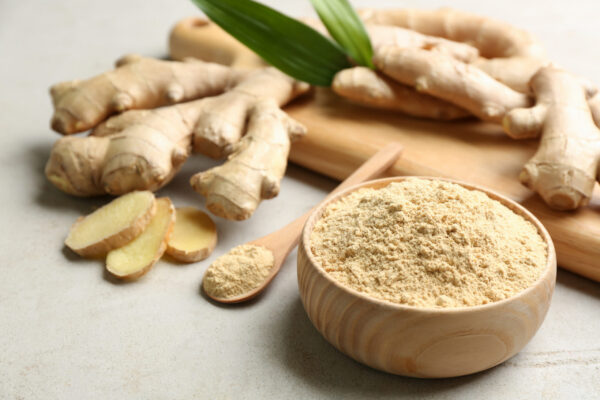
4. Ginger, ginger, ginger!
One of my most favorite and versatile herbs, this spicy root is one of the greatest options for reducing Kapha, boosting digestion and metabolism, and increasing circulation. During a Kapha imbalance, drinking ginger tea each day between meals is essential for removing the slow, dull qualities this doshic imbalance brings. Besides drinking the tea, one can also add ginger to each meal and even soak in a stimulating ginger and baking soda bath.
Click here for our extra potent Ginger Tea Recipe.
5. Avoid ALL snacking.
If Kapha is high, there is a really good chance that the digestion and metabolism are low. During times of low digestion, it is crucial to avoid all snacking and stick to eating 3 meals a day (at proper times). Eating between meals during a Kapha imbalance will overtax the already weakened digestive fire, create indigestion, and lead to toxic build-up. This bad habit will also negatively affect the pancreas and should be avoided by anyone with diabetes or insulin resistance.
6. Do not eat past 6 pm.
Although this is a hard recommendation for most people to follow, it is extremely vital for any Kapha disorder. Taking in food after 6 pm will further increase the Kapha and decrease the digestion/metabolism. Alternatively, eating a light, easy-to-digest dinner each night between 5 pm and 6 pm is a powerful way to balance out your Kapha. Great Kapha food options are broth-based soups, quinoa and steamed veggies, millet and veggie sauté, or a bean, quinoa, and salsa burrito.
7. Spice up your meals.
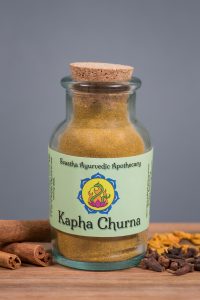
An easy and tasty way to combat Kapha is to simply add digestive, warming spices to each meal. This can be as simple as adding cinnamon and ginger to your oats, adding black pepper to your dinner or sautéing your veggies in cumin, coriander, and fennel. All spices are beneficial for Kapha; however, these are the best choices: Kapha Churna, turmeric, dry ginger, black pepper, cayenne, cumin, coriander, fennel, brown mustard seed, ajwain, cinnamon, cardamon, clove, and fenugreek. ***Salt is very Kapha-provoking and should be used sparingly.
Try our Kapha Churna spice blend!
8. Get moving, every day!
Although this should be a given for every-body, this holds especially true for those with a Kapha imbalance. Taking 20-30 minutes each day to be active and get the blood pumping is a simple yet powerful way to reduce Kapha build-up in the body and the mind. Some wonderful and realistic options include: taking a 20-minute brisk walk after lunch (or anytime), 30 minutes on the elliptical machine (non-weight bearing), 30 minutes of a moderate yoga practice, 30-minute exercise video, 30 minutes of biking, or a 30+ minute hike. Exercising doesn’t have to be overly time-consuming or exhausting. Keep it simple, as daily consistency is the key to permanent changes.
Discover my 12 essential exercise tips here!
9. Perform 10 Sun Salutations each morning.
Surya Namaskar, or the Sun Salutation, is a great way to start the day, awakening the body and mind. The sun salutation is exceptionally great for Kapha imbalances due to the warming nature of the practice. Perform these each morning upon awakening to start your day fresh, vibrant, and energized. To begin, you may want to start with 5 sets and then add a couple each week until you have reached the full ten count. Be consistent and make sure to make this a daily practice, 5-7 days each week.
Discover more Kapha-reducing Yoga postures here.
10. Kapala Bhati Pranayama.
Kapala Bhati is the Yogic breathing technique that comes from a quick, “forceful” diaphragm exhalation out of the nose. This movement is great for toning the abdomen and increasing heat, circulation, metabolism, and digestion. This pranayama practice is a powerful way for balancing Kapha, as it stimulates both the body and the mind. If you have been trained by a knowledgeable teacher, you can practice this breath work for 108-1008 breaths per session. The best time for this is first thing in the morning on an empty stomach. You can fit this in either directly before the Sun Salutations or directly after.
11. Perform an Abhyanga massage with Kapha Oil two times a week.
A stimulating self-oil massage is a great way to remove stagnation throughout the body and get things moving. A Kapha-style oil massage should be performed at the beginning of the day. This massage should be done using a Kapha Oil that is infused with heating, stimulating herbs. You can start at the feet and work your way up the body, with quick movements to lift and awaken the energy. Keep the oil on for at least 30 minutes before taking a warm shower to rinse it off (do not use soap!). If the oil is too heavy for you, you can alternatively perform a dry massage with an exfoliating shower brush.
*Oil massages should be avoided if there is a heavy coating on the tongue or other clear signs of toxins in the system.
Discover our warming, invigorating Kapha Massage Oil here!
12. Trikatu Churna.
Trikatu is a traditional Ayurvedic formula consisting of the “three pungents”. These three powerful herbs are essential for a Kapha-reducing regimen and can be taken 3 times daily, before meals. Mix this formula with a teaspoon of honey and 1/4 cup of warm water for the best results. Alternatively, these herbs can be added directly to the food.
Read more about the health benefits of Trikatu here.
Purchase our organic, handcrafted Trikatu Churna here.
13. Kapha-reducing herbs.
Herbs can be a powerful complement as you begin to implement these healthy diet and lifestyle changes. Most Kapha herbs will be either bitter, pungent, and/or astringent, as these tastes generally reduce Kapha. They are typically penetrating, heating, and sharp in quality to stimulate the system, enhance digestion, and remove stagnant Kapha toxins. The best choices for removing Kapha from the system offered in the Ayurvedic Pharmacopia include Punarnava, Neem, Kutki, Kalmegha, Turmeric, Ginger, Pippali, Black Pepper, Trikatu, Mahasudarshana, Gokshura (for kidneys), Guggulu, Punarnava Guggulu, Kanchanara Guggulu, Shilajit, and Chitrak.
*Please note that these herbs are only to be taken when under the guidance of a knowledgeable Ayurvedic Practitioner. Taking herbs “blindly” can lead to further imbalance if one does not look at the whole picture.
Try our digestive-enhancing Kapha Honey Infusion!


Try our Kapha Churna spice blend!

Very much nice information on kapha type body
Thank you Sathyashri! I am happy you have enjoyed the article.
Namaste, Danielle
very good information, thank you
Wonderful help thankyou so so much
This is great! thanks for sharing
Very informative specifically for people with kapha dosha… Thank you.
Hi Harshal,
Thank you for taking the time to write these kind words. I am glad you have found the information helpful! Please contact me anytime with questions!
Namaste,
Danielle
This is excellent information. However, I am a Vata, but am experiencing too much Kapha. Are these suggestions applicable to a struggling Vata?
Joan Rose
Hi Joan,
Thank you for this great question! I would have to hear more details on your exact Kapha symptoms and any current Vata imablance that was going on to give you more a more specific and accurate answer. However, looking at these recommendations, most of them should be suitable for a Vata-type with a Kapha imbalance (generally speaking of course).
The main one that may be too stimulating for Vata would be the Kapala Bhati Pranayama which I would avoid. Some of the Kapha-reducing herbs such as neem, kalmegha, and mahasudarshana, would be too bitter and drying for Vata, whereas others such as Trikatu, ginger, and shilajit would be better options. Otherwise it seems fairly safe to move ahead with the other recommendations, while using your own awareness and discernment.
I have posted a food chart that is specific for both Vata and Kapha types or people with a Kapha-Vata imbalance that you may find useful. Here is a link if you are interested.
Thank you again for writing in with this great questions! Be well:)
Namaste,
Danielle
[…] For more information about how to keep this dosha in balance, check out this link: How to Balance Kapha Dosha – Svastha Ayurveda […]
no eating after 6 p.m. how?
than when these people will have dinner?
Hi Farham,
Thank you for writing in with your question! I am sure you are not alone in your thoughts.
Finishing all food before 6 pm (give or take) means sitting down to eat by 5:30 pm at the latest and then not snacking after dinner. This can be a big challenge for those that are used to eating dinner or snacking late. This can be a cultural habit, a family habit, or simply a personal habit. Some individuals work late as well, making this suggestion even more difficult to adhere to.
If you fall under any of these categories, I still suggest eating dinner earlier, but you may need to work in baby steps to make it a smoother transition. For example, if you typically are sitting down to eat around 8 pm, then I would move this time back by 30 minutes every week until you are finding yourself hungry and ready to eat around 5:30 pm.
If you are not getting home from work until after 6 pm, then I would either bring dinner to work (especially if you working until 7 pm or later), or (if you are just getting home around 5:30 or 6 pm) have dinner already prepared when you get home so you can warm it up and eat as early as possible.
There may be other constraints as well such as family members not being ready to eat so early, but if you really want to make this goal a reality for you, you can often find ways to make it happen, even if the end result is not “perfect” (e.g. a compromise of eating at 7 pm instead of 9 pm is a HUGE improvement).
I hope this helps! Let me know if you have any further questions!
Namaste,
Danielle
Namaste, from Parker, CO 🧘♂️
Namaste Jenn,
I hope you are enJOYing this beautiful (and cold) Colorado day:)
Thanks for writing in!
Many blessings,
Danielle