


As we move our way out of summer and into fall, it is the perfect time to come back to a stable, grounding daily routine. A healthy daily routine, known as dinacharya in Ayurveda, is considered one of the best medicines for the body, mind, and consciousness. It grounds the energy of the body, stabilizes the mind, reduces fatigue, improves digestion, regulates elimination, and promotes longevity and a high quality of life.
What does a healthy daily routine consist of?
Dinacharya translated as daily (dina) routine (charya), is one of the most important aspects of Ayurveda. Each individual’s routine will look a bit different, depending on their needs, life commitments, and preferences; however, certain activities will generally be universal, such as sleeping, eating, bathing, and working.
A more in-depth dinacharya will also include multiple self-care practices such as tongue scraping, oil massage (abhyanga), herbal regimens, exercise, personal hobbies, time with loved ones, Yoga, meditation, breath-work (pranayama), mantra, prayer, and/or spiritual studies.
What are the most important aspects of a healthy dinacharya?
To create a healthy daily routine, there are several intentions that should be set. You see, it is not only about what activities you choose, but when you perform them and how they are performed can be equally significant.
For instance, you may be sleeping eight hours each night, but if you are sleeping from 1 am to 9 am, your sleep will not be as restorative as sleeping from 10 pm to 6 am. You may be eating three meals a day, but if you are eating dinner at 9 pm, or you’re eating lunch at your desk while working, then once again, these factors will have a negative impact on an otherwise healthy activity.
Finally, consistency is key, so make sure your schedule is realistic, accessible, and enJOYable!
But wait, there’s more. . .
Have you heard the saying “less is more”? This can be a great mantra when it comes to a healthy daily routine. Making space between your daily commitments (meetings, appointments, classes, meals, kid obligations, etc) can make a busy day much less stressful. So if you typically allow 10 minutes between activities, make it 20; if it takes you 15 minutes to get to work, give yourself 25 minutes to get there. You will be amazed at how much more enjoyable your day will be if you are not racing all day.
To allow more ease in your daily routine, keep these tips in mind:
- Avoid making too many commitments
- Allow extra space between meetings, appointments, and activities
- Avoid making unreasonable, excessive daily to-do lists (instead prioritize!)
- Allow time for resting, walking, stretching, breathing, and sitting down for meals
- Allow one day each week for resting and resetting
Where to begin?
An Ayurvedic routine can be a big change and a time-consuming commitment, especially in the beginning. Therefore, to avoid becoming overwhelmed with doing too much too quickly, it is always best to make slow and steady progress by starting with the basics.
Although I find all aspects of an Ayurvedic routine important, the most basic foundation of a healthy dinacharya lies in our schedule for sleeping and eating. Just getting these two essential activities on a healthy and consistent schedule will help bring balance and regulation to your days!
There may be some slight variations for each individual, but here is a basic chart for optimal times for eating and sleeping.
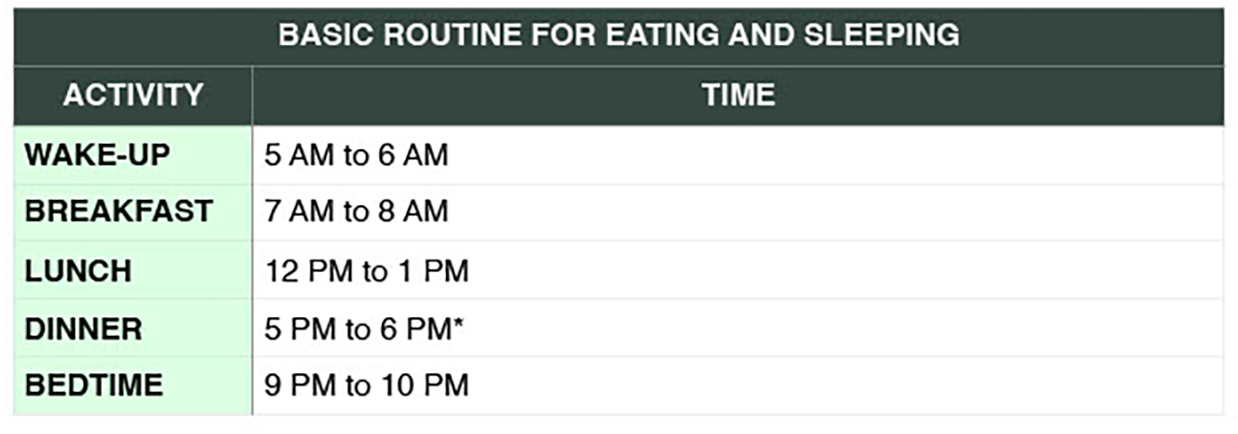
*Dinner may be a bit later in the summer months when it stays light out for longer, but make sure to finish eating by 7 pm during these longer days.
Once you have these foundational activities in line, you can add more goals into your routine. Start by welcoming one to two simple practices, and one that is more challenging. Some simple practices may include drinking warm water upon awakening, scraping your tongue each morning, massaging your feet with oil before bed, or taking a bath at night. Some slightly more time-consuming and challenging practices might include exercising routinely, meditating daily, performing a full-body oil massage, or going to set Yoga classes each week. After a few weeks of getting comfortable and consistent with these new activities, keep this cycle going by adding in one or two more goals each month.
Dinacharya Chart
Here is a general chart to use as a guideline while creating your daily routine. This is a fairly all-encompassing chart, and you may be thinking, “How am I ever going to fit all of this in??” No need to fret! Remember to start with the basics (a healthy sleeping and eating routine) and then slowly add in a couple of additional activities every couple of weeks. This guide will give you some good ideas of self-care regimens to choose from.
Click here for a PDF copy of this chart.
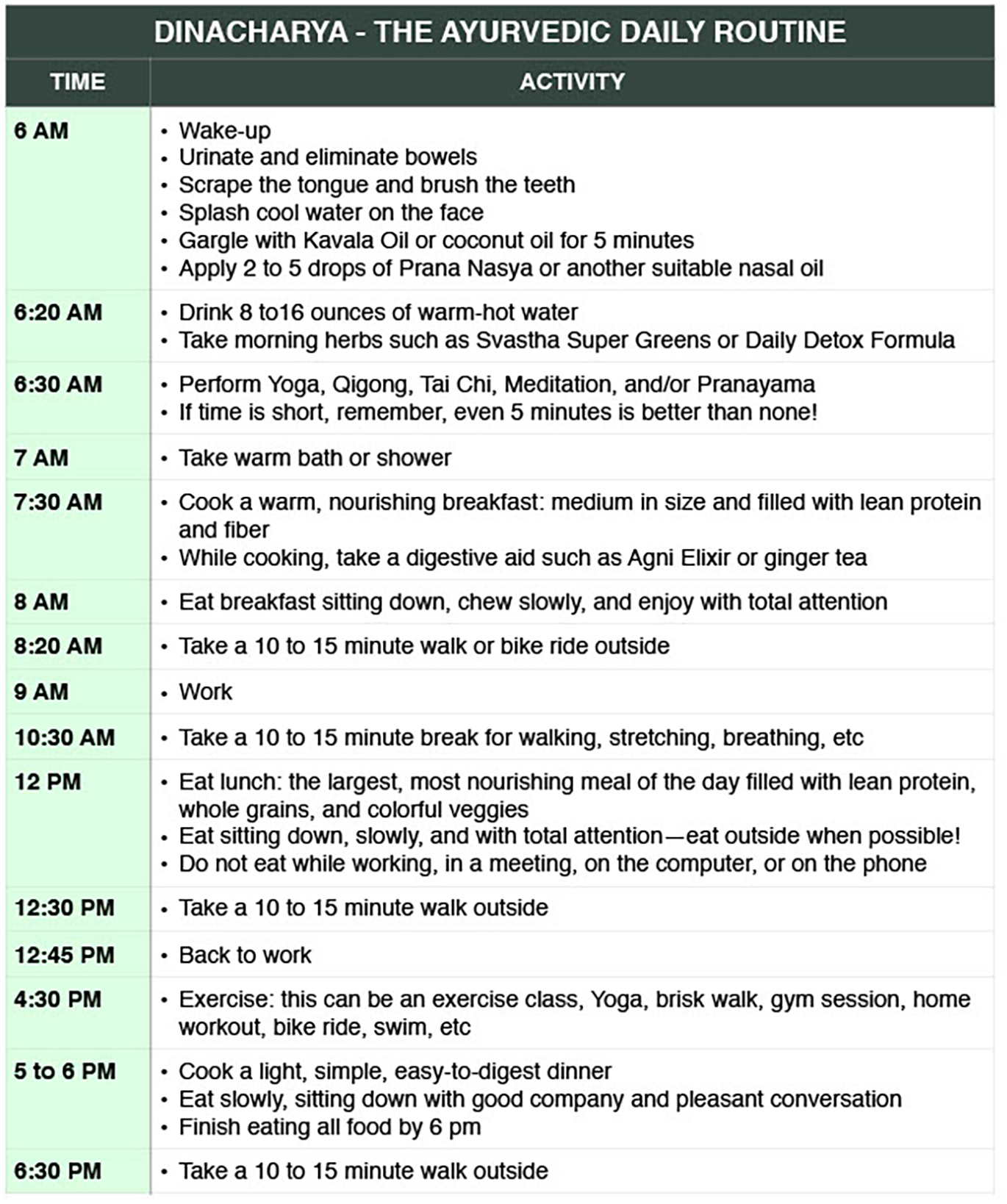
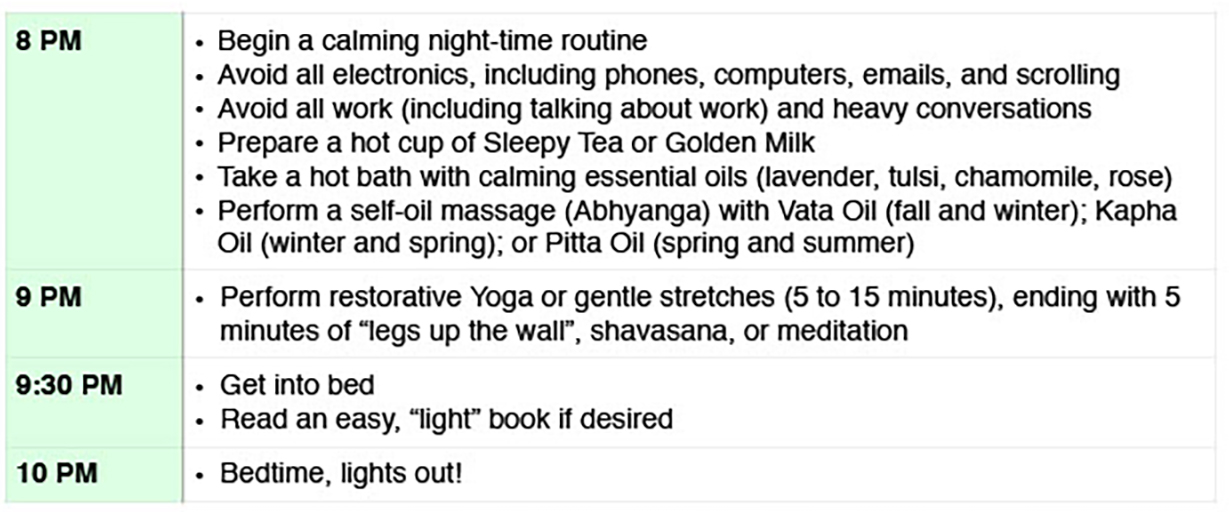
Click here for a PDF copy of this chart.
Making It Your Own
Since everybody’s daily routine will look a bit different, here is a chart to print out, fill out, and hang on your refrigerator for a gentle reminder each day.
Print out our DAILY ROUTINE GOALS template here!
Additional Tips
• Having a set routine can often feel robotic after a while; avoid this by being mindful throughout your entire day (you may like this “MindBell” app), stopping to take deep breaths routinely, and appreciating all the wonders around you!
• Some activities may not need to be done daily, but instead can be scheduled on specific day(s) each week (e.g., “perform abhyanga Monday, Wednesday, and Friday nights).
• Your weekday schedule may look different from your weekend schedule. This is totally fine, assuming you do not go off the deep end with your weekend fun and festivities:)
• Some times listed can be moved around according to your scheduling needs (e.g., exercising before work rather than after)—the most important factor is to do what works for you to make it accessible and consistent!
• Even self-care practices can become added stressors if you are aiming for perfection or simply doing too much; rotate through the various self-care activities throughout the week rather than trying to do them all in one day (or night).
• Rest days are necessary—having a day where your schedule is light, more flexible, and less crowded is a great way to reset each week.
Modify When Needed!
There are certain times when your daily routine should be put aside, and life should be listened to. Here are a few times when your daily routine will need some modifications:
- Times of sickness
- During menstruation
- While traveling (although keeping to a solid sleeping and eating schedule can be helpful)
- During pregnancy
- On rest days
Conclusion
A healthy and consistent daily routine is essential for cultivating balance in your body, mind, and consciousness. It brings stability, regulates your circadian rhythm, and improves sleep, mood, mental clarity, energy, digestion, and elimination. To avoid getting overwhelmed with too many changes at once, establishing a healthy sleep and eating routine can create a solid foundation for your daily routine. From there, adding a few self-care additions each month will keep you moving in a positive direction. You will be amazed at how little shifts in your life can bring so much joy, peace, health, and happiness in your days!
Keep Reading
- Healthy Breakfast Tips and Ideas
- 12 Ways To Get The Most Out Of Your Exercise Routine
- Abhyanga: The Ayurvedic Self-Oil Massage
- An Ayurvedic Nighttime Routine For a Calm Mind and Sound Sleep
Products For Your Daily Routine
- Svastha Super Greens
- Daily Detox Formula
- Kavala Oil (mouth oil for oil pulling)
- Prana Nasya
- Vata Massage Oil
- Pitta Massage Oil
- Kapha Massage Oil
- Agni Elixir
- Sleepy Tea
- Svastha Golden Milk
Start your day off right with our Svastha Super Greens!

End your day with a calming cup of Svastha Golden Milk!